Flow modelling
Laminar or turbulent, isothermal or non-isothermal, steady or transient.
 EasyCFD
Computational Fluid Dynamics made approachable
EasyCFD supports numerical simulation of two-dimensional and three-dimensional axisymmetric fluid flow and heat transfer, combining an accessible interface with practical CFD capabilities.
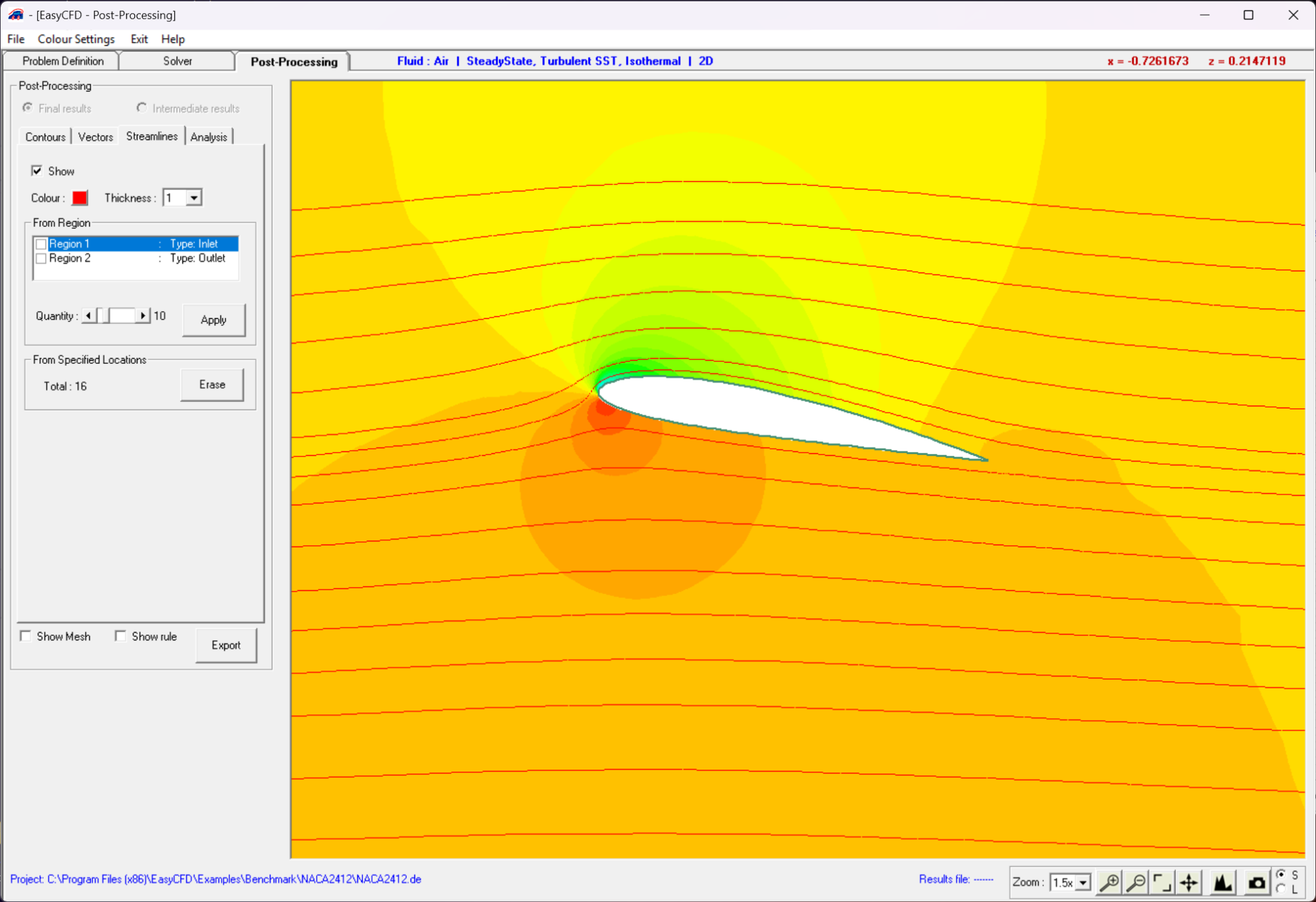
Core capabilities
Draw or import geometry, generate the mesh, define the physics, monitor convergence and analyse the resulting flow field.
Laminar or turbulent, isothermal or non-isothermal, steady or transient.
Conduction in solids, convection and conjugate heat-transfer analysis.
Create structured and unstructured boundary-fitted computational meshes.
Choose k-ε variants, SST k-ω, Spalart–Allmaras or the Transition k–kL–ω model.
Model passive scalars such as smoke, concentration and pollutants.
Analyse flow through isotropic and anisotropic porous regions.
Select first- or second-order upwind and bounded high-resolution TVD schemes.
One continuous process
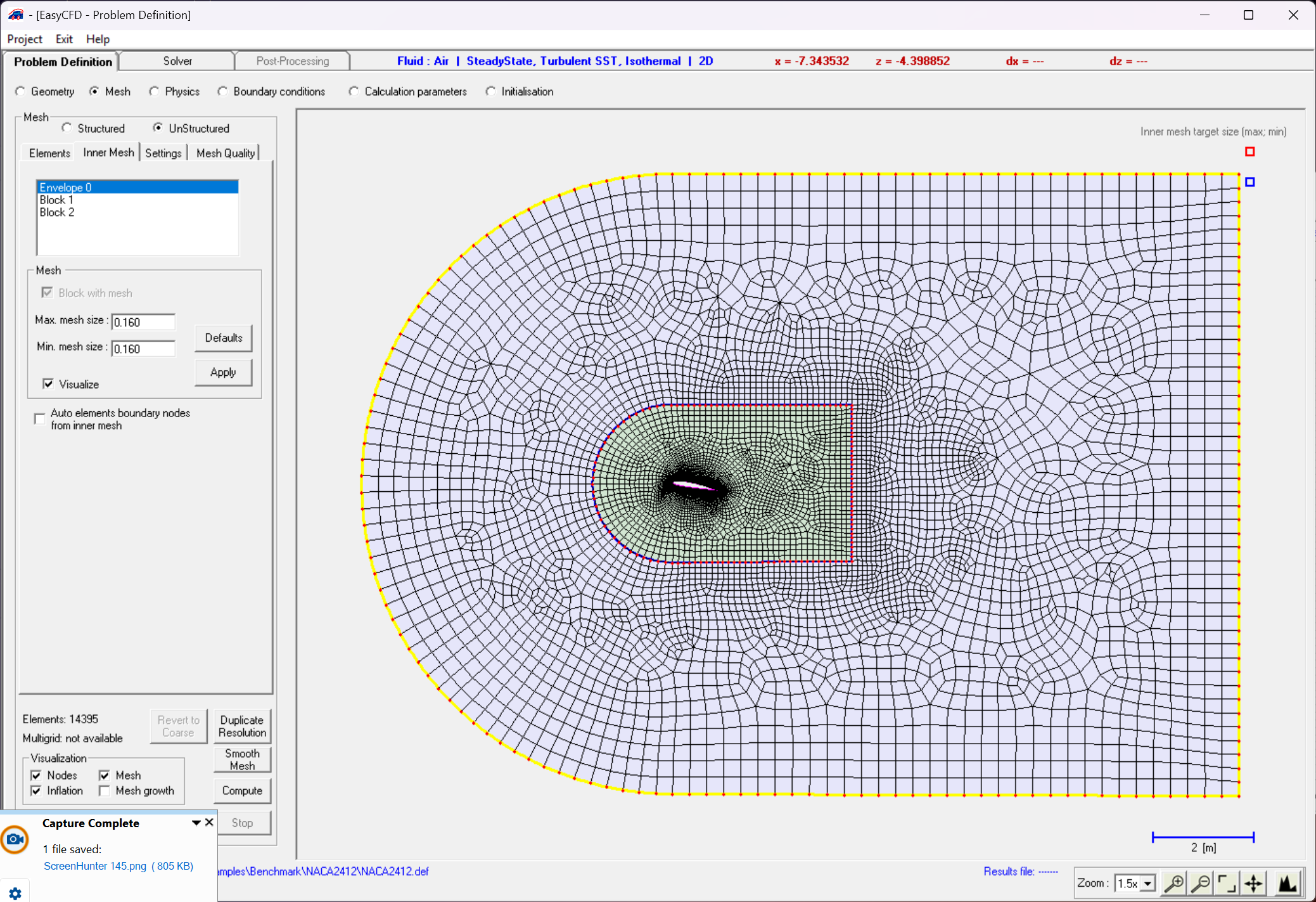
Draw geometry or import DXF and point data, generate the mesh and define boundary conditions.
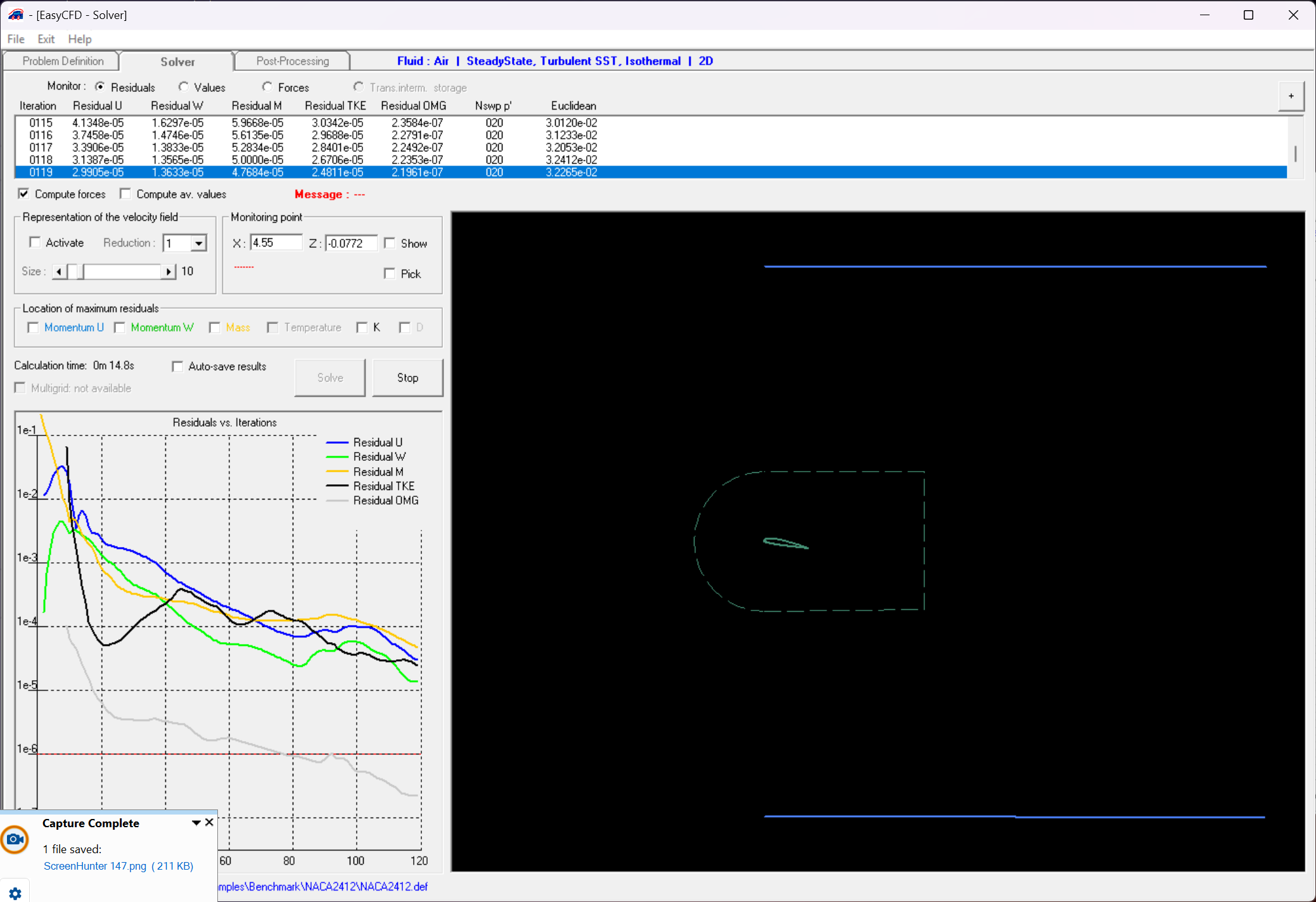
Control numerical parameters and monitor the iterative calculation while it runs.
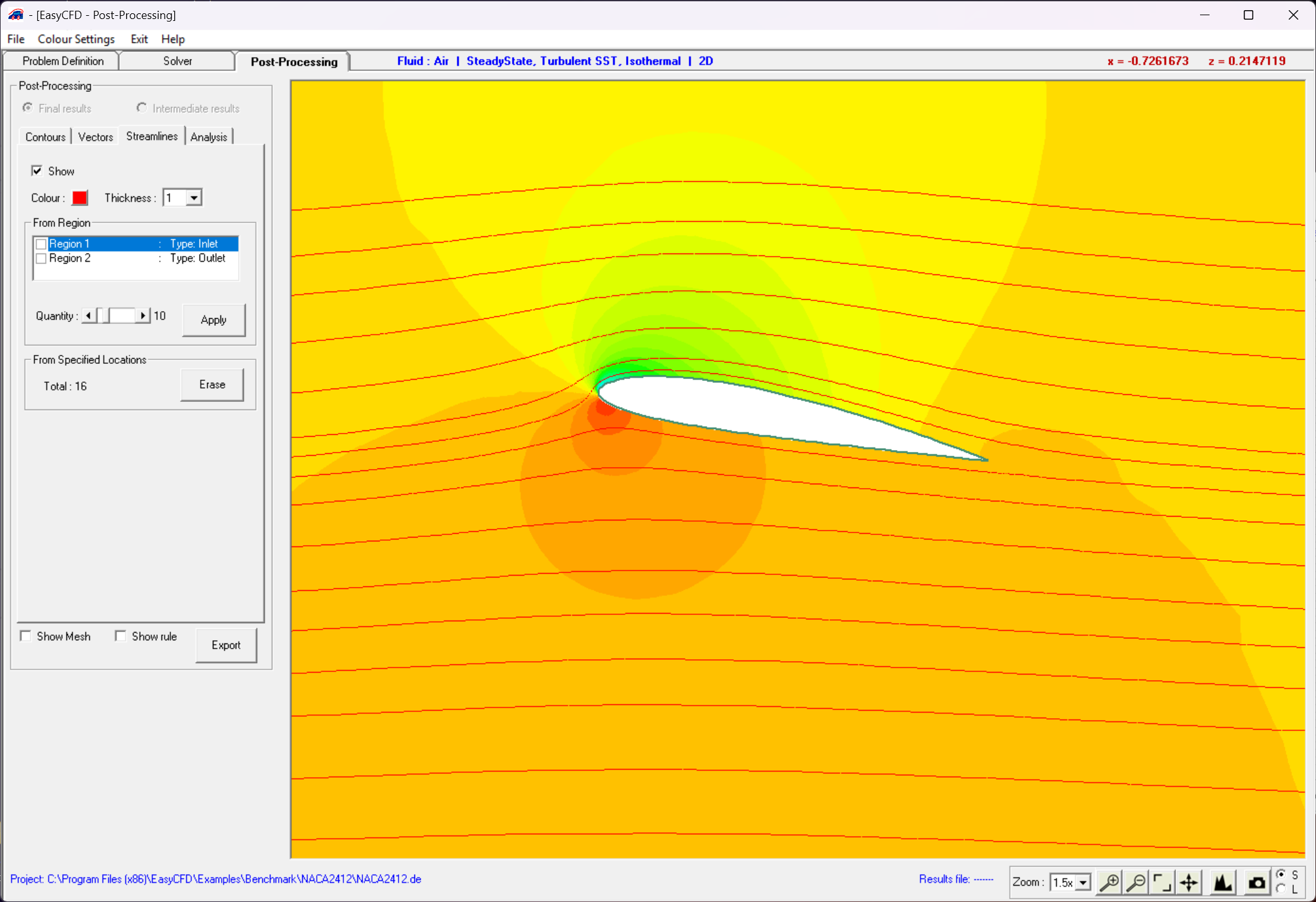
Inspect contours, streamlines, vectors, XY data and statistical information.
Worked CFD cases
Explore complete EasyCFD studies with problem definitions, computational meshes, calculated fields and tutorial material.
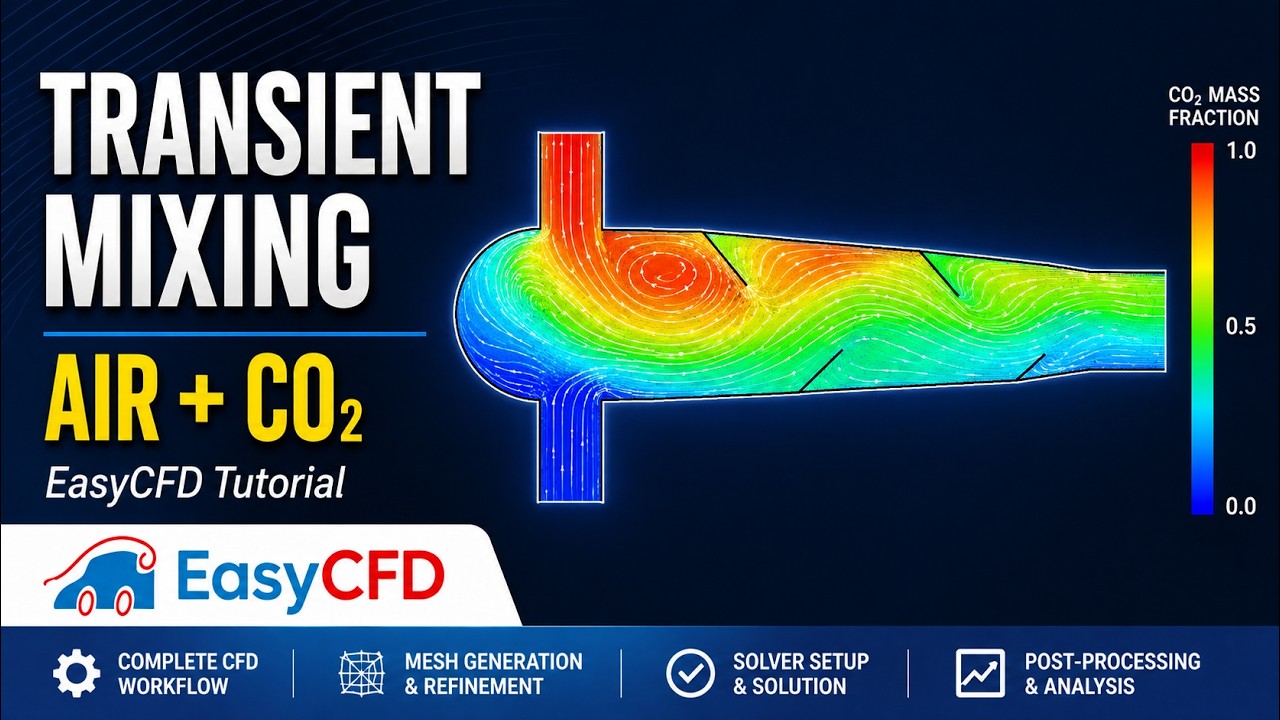
Time-dependent and spatially varying inlets in a baffled channel.
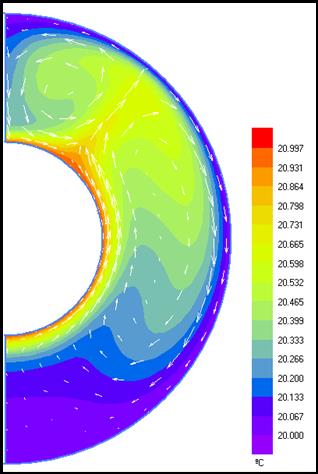
Temperature contours and velocity vectors in a closed enclosure.
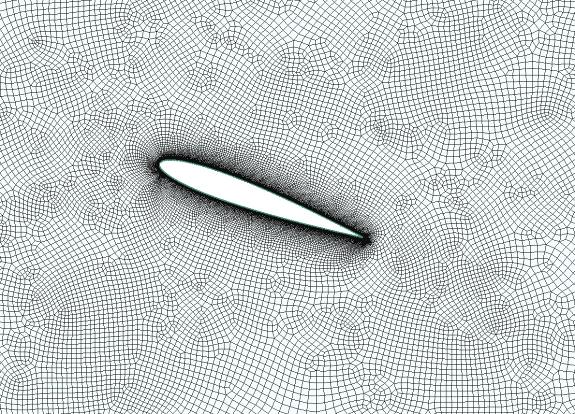
Unstructured meshing and aerodynamic coefficient comparison.
Built for understanding
EasyCFD is mainly oriented toward didactic and educational use, while also providing a valuable environment for initial analysis of practical engineering situations.
See applicationsScientific foundation
Explore benchmark material and publications that document the numerical methods and applications associated with EasyCFD.
Start exploring
Access the EasyCFD installer, user manual, licence information and supporting resources.